Water utilities face mounting pressure from aging infrastructure, rising customer expectations, regulatory compliance demands, and the urgent need to reduce water loss. The answer isn’t just working harder with existing systems. It’s building a modern water utility software stack that transforms how you deliver service, engage customers, and manage operations.
A comprehensive technology stack for water utilities integrates multiple specialized solutions into a cohesive ecosystem. Think customer portals for self-service, smart metering for real-time data, billing systems for accurate invoicing, and analytics platforms for informed decision-making. When these components work together, utilities can achieve what manual processes never could: immediate leak detection, proactive customer engagement, and operational efficiency that directly impacts the bottom line.
The stakes are high. Non-revenue water averages between 30% and 35% globally, representing billions in lost revenue annually. Customer satisfaction in the utility sector lags behind other industries. Meanwhile, digital transformation is accelerating across the water sector, with analysts projecting $170 billion in spending on digital water solutions in the U.S. and Canada from 2024 to 2033.
This guide examines the essential components of a modern water utility software stack, explores how these technologies work together, and provides practical guidance for utilities ready to modernize their operations.
Table of Contents
ToggleWhat Makes Water Utility Software Different?
Water utility software must address unique operational challenges that don’t exist in other industries. Unlike retail or banking, water utilities manage physical infrastructure spread across vast service areas, handle complex regulatory requirements, and serve customers who expect uninterrupted service 24/7/365.
The best water utility software solutions handle these specific requirements. They track consumption for thousands or millions of service points, integrate with field operations for maintenance and repairs, comply with environmental regulations, support emergency response during service interruptions, and provide transparent billing for a service customers often take for granted until something goes wrong.
Generic business software can’t do this effectively. A standard CRM doesn’t understand the relationship between a water main, the meters it feeds, and the customers affected when that main breaks. An off-the-shelf billing system struggles with the tiered rate structures, seasonal adjustments, and conservation incentives that water utilities use to encourage responsible consumption.
Water-specific software understands these nuances. It knows that a sudden spike in consumption at 3 AM likely indicates a leak, not normal usage. It can automatically flag accounts for field inspection, notify customers of potential problems, and help utilities prevent thousands of gallons of water loss before the next billing cycle.
The technology landscape has evolved significantly in recent years. Modern water management software capabilities now include mobile access for field teams, GIS integration for asset visualization, automated workflows for service requests, and purpose-built tools for backflow prevention, water quality monitoring, and asset management.
Core Components of the Water Utility Technology Stack
A modern water utility technology stack consists of several integrated layers, each serving specific operational needs while contributing to the overall customer experience and business performance.
Customer Information System (CIS)
The customer information system serves as the central nervous system for water utility operations. It maintains the master record for every customer account, service address, meter, and billing relationship in your system.
A water-focused CIS does more than store addresses and account numbers. It tracks service history, manages work orders, processes service requests, handles customer communications, and maintains the complex relationships between properties, meters, and accounts that exist in real-world water distribution.
Consider what happens when a customer calls about a billing question. Your CIS should instantly show the representative the account history, recent consumption patterns, any service calls or meter changes, payment history, and comparable usage for similar properties. Without this integrated view, representatives waste time switching between systems while customers wait on hold.
Modern CIS platforms integrate with field service management, allowing crews to update service orders, document repairs, and capture photos or notes that immediately appear in the customer record. This real-time connection between field and office eliminates the delays and errors that plague paper-based or disconnected systems.
Billing and Revenue Management
Accurate billing builds customer trust and protects utility revenue. Water billing software must handle complexities that standard accounting packages can’t address, including tiered rate structures where the first 5,000 gallons cost less than the next 5,000, seasonal rates that adjust based on time of year, conservation penalties for excessive usage, and base charges that apply regardless of consumption.
Utility billing solutions streamline the meter-to-cash process by automating read collection, calculating charges based on current rate structures, generating invoices and bill inserts, processing payments through multiple channels, and handling exceptions and adjustments.
The billing cycle touches nearly every operational area. Meter readers or AMI systems provide consumption data. The billing engine calculates charges. Customer portals present bills and accept payments. Collection systems manage delinquent accounts. Financial systems record revenue and accounts receivable. When these components integrate smoothly, utilities reduce billing errors, speed up payment processing, and minimize disputes.
Integration matters immensely. If your billing system can’t communicate with your customer portal, customers see outdated information and call with questions you should have prevented. If field service orders don’t update billing records, you bill customers for services at properties where meters have been removed. These disconnects frustrate customers and cost utilities real money.
Smart Metering and AMI
Smart water meters represent one of the most transformative technologies in modern water utility operations. Unlike traditional meters that require manual reading, smart metering solutions provide continuous, automated data collection through Advanced Metering Infrastructure (AMI).
The value proposition is straightforward. AMI meters collect consumption data at regular intervals (hourly, daily, or even more frequently), transmit that data wirelessly to a central system, enable remote reading without truck rolls, detect leaks through unusual consumption patterns, and support time-of-use rates and conservation programs.
For water utilities specifically, AMI technology delivers benefits that manual meter reading simply can’t match. You can identify leaks within hours instead of months, reducing non-revenue water significantly. You can notify customers of high usage before they receive a shocking bill. You can eliminate estimated reads and the disputes they generate.
The smart water metering market has reached significant scale, hitting $6.8 billion globally as utilities worldwide recognize that metering systems account for over 20% of digital spending. This investment reflects the technology’s proven ability to optimize shrinking workforces, recover lost revenue, enhance customer engagement, and better manage underground assets.
Implementation requires more than installing new meters. Utilities need robust meter data management systems that process billions of daily data points, analytics platforms that turn raw data into actionable insights, integration with billing systems for accurate invoicing, and customer-facing tools that make consumption data useful and understandable.
Customer Engagement Platforms
Today’s water customers expect the same digital convenience they get from their bank, their retailer, and their streaming services. They want to view bills on their phone, pay online at 11 PM, report problems without calling, and understand their consumption patterns.
A customer engagement platform delivers these capabilities through self-service portals, mobile applications, automated communications, and digital payment processing. The best platforms don’t just digitize existing paper processes. They reimagine the customer relationship entirely.
Consider bill payment. A basic online payment portal is better than forcing customers to mail checks. But a truly modern platform does more. It offers multiple payment methods (credit card, ACH, mobile wallet), supports payment plans and autopay enrollment, sends reminders before due dates and confirmations after payment, and integrates with your billing system to prevent the “I paid online but still got a shutoff notice” scenarios that damage customer relationships.
Customer portal statistics demonstrate the business impact. Organizations implementing modern portals see a 63% reduction in service workload, improved customer satisfaction (with 86% willing to pay more for better experiences), and measurable benefits through automation and personalization. AI is increasingly integrated into customer engagement strategies, with most service organizations using AI-powered tools to automate routine interactions, assist agents, and improve efficiency.
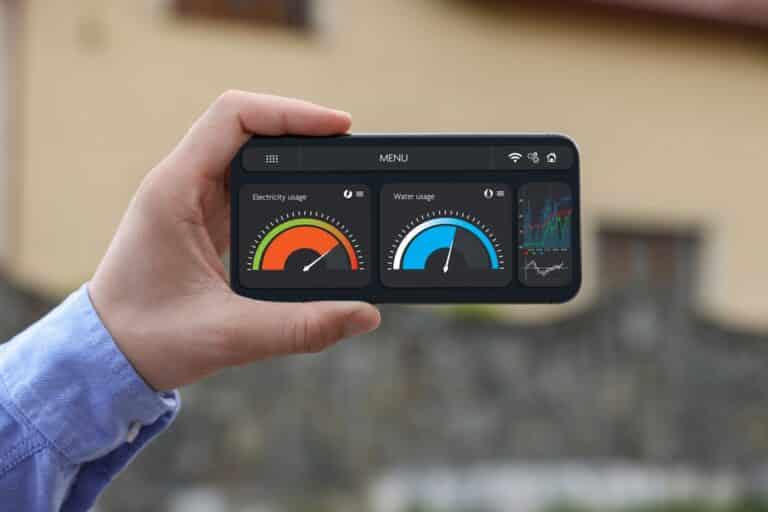
Usage visualization represents another powerful capability. When customers can see their daily or hourly water consumption, they start making connections. “That spike on Tuesday was when I filled the pool.” “My usage is much higher than my neighbors.” “I’m using water overnight when everyone’s asleep, probably a toilet leak.” This awareness drives conservation and helps customers catch problems early.
Outage and service notifications transform the utility-customer relationship during emergencies. Instead of wondering why water pressure dropped or when service will resume, customers receive proactive alerts on their preferred channel (text, email, app notification). This simple courtesy reduces call volume during crises when your team needs to focus on restoration, not answering phones.
The Silverblaze Customer Portal integrates these capabilities into a comprehensive platform that connects with your CIS, billing system, and smart meter infrastructure. Customers get 24/7 access to account information, usage data, and service tools. Your team gets reduced call volume, fewer billing disputes, and data on how customers interact with your digital channels.
Data Analytics and Business Intelligence
Water utilities generate enormous amounts of data. Every meter read, every service call, every payment, every chemical test represents a data point. The question is whether you’re using that data to drive better decisions.
Real-time data monitoring and analysis transform raw information into operational intelligence. Analytics platforms can detect consumption anomalies that indicate leaks or theft, predict when infrastructure components will fail, identify high-cost customers for targeted conservation programs, optimize chemical treatment based on water quality trends, and forecast demand to improve resource planning.
The shift from reactive to proactive management represents a fundamental change in how utilities operate. Instead of responding to main breaks, you use pressure monitoring and predictive analytics to identify weak points before they fail. Instead of discovering billing errors when customers complain, you catch them automatically before invoices go out. Instead of guessing about future capital needs, you use asset data to build evidence-based infrastructure replacement plans.
Visualization matters. Even the best analytics engine provides limited value if insights are buried in spreadsheets or complex reports. Modern business intelligence tools present data through intuitive dashboards that show key metrics at a glance, geographic heat maps that reveal patterns in your service area, trend lines that illustrate changes over time, and drill-down capabilities that let you investigate anomalies.
Performance metrics and KPIs become more than numbers on a report. They drive continuous improvement. You track billing accuracy and see the impact of smart meter deployment. You measure first contact resolution and identify training needs for customer service representatives. You monitor non-revenue water and quantify the return on leak detection programs.
Work and Asset Management
Water distribution systems include miles of pipe, thousands of valves, hydrants, treatment facilities, pumping stations, and storage tanks. Managing these assets effectively requires software that tracks location, condition, maintenance history, and replacement schedules.
Computerized Maintenance Management Systems (CMMS) and Enterprise Asset Management (EAM) platforms help utilities shift from reactive repair to preventive maintenance. These systems schedule regular inspections and maintenance, track repair history and costs, manage parts inventory, and plan capital improvements based on asset condition and risk.
Integration with GIS provides spatial context. When a main breaks, your work management system should show nearby valves, affected customers, and recent maintenance in the area. Field crews access this information on mobile devices, update work orders in real time, and capture photos or notes that become part of the permanent asset record.
The connection between asset management and customer service matters more than many utilities realize. When customers report low pressure or discolored water, your team needs to know whether there’s planned maintenance in the area, whether nearby infrastructure has known issues, and whether other customers have reported similar problems. This integrated view enables faster problem resolution and better customer communication.
GIS and Spatial Analysis
Geographic Information Systems (GIS) provide the visual framework that ties together all the components of your water utility software stack. GIS platforms map your entire distribution network (pipes, valves, meters, facilities), overlay customer locations and service areas, visualize consumption patterns and anomalies, and support planning for infrastructure improvements and system expansion.
The power of GIS becomes clear during emergencies. When a main breaks, your operations team can immediately identify the affected section, the valves needed to isolate it, and all customers who will lose service. Automatically generated customer notification lists ensure everyone impacted receives timely updates. Repair crews see recent work in the area and locate critical infrastructure.
Water management software capabilities increasingly include sophisticated GIS integration that enables utilities to map water flow patterns, optimize inspection routes, monitor service areas for equity in infrastructure investment, and visualize the relationship between assets, customers, and operational data.
Modern GIS platforms integrate with hydraulic modeling software, allowing utilities to simulate system performance under different conditions. What happens to the pressure if you take this pump station offline? How does peak demand affect the eastern service area? These models support better decision-making about operations and capital investments.
How ERP Fits Into the Water Utility Stack
Enterprise Resource Planning (ERP) systems integrate core business processes, including financial management, human resources, procurement, and inventory control. While ERP platforms aren’t water-specific, they play an important role in the broader technology stack.
ERP systems are transforming water utilities by providing a unified platform for business operations. Rather than maintaining separate systems for accounting, payroll, purchasing, and inventory, utilities can manage these functions through an integrated solution that ensures data consistency and eliminates duplicate entry.
The key is integration between your ERP and your water-specific systems. Your billing system generates revenue transactions that flow into the ERP for financial reporting. Work orders create purchase requisitions for parts and materials. Labor tracking in your CMMS informs payroll processing. When these connections work smoothly, you eliminate manual reconciliation and reduce errors.
Some utility-focused ERP vendors have developed specialized modules for water operations. These solutions attempt to combine business management with utility-specific functions like billing, customer service, and asset management. The challenge is that truly effective water utility software requires deep industry expertise and ongoing innovation that general-purpose ERP vendors often can’t match.
Many utilities find success with a hybrid approach: using best-of-breed water utility software for customer-facing and operational systems while relying on ERP for back-office financial management. The key is ensuring robust integration between these systems so data flows seamlessly without manual intervention.
Emerging Technologies Reshaping Water Utilities
The water utility software landscape continues to evolve as new technologies mature and prove their value. Understanding these trends helps utilities plan for future capabilities and competitive positioning.
Artificial Intelligence and Machine Learning
AI and machine learning are moving beyond buzzwords to deliver practical value in water utility operations. These technologies excel at pattern recognition and prediction, making them ideal for leak detection through consumption anomaly identification, demand forecasting based on weather, historical usage, and other factors, customer segmentation for targeted conservation programs, and predictive maintenance that identifies equipment likely to fail.
The shift toward AI-powered solutions reflects emerging water management trends, where machine learning algorithms achieve high accuracy in forecasting water quality indices and detecting contaminants before they reach hazardous levels. Real-time water quality sensors combined with AI analysis enable faster response to contamination events.
Implementation doesn’t require completely replacing existing systems. Many utilities start by adding AI capabilities to specific processes (like leak detection or customer service chatbots) and expanding as they demonstrate value.
IoT and Sensor Networks
The Internet of Things extends beyond smart meters to include pressure sensors, water quality monitors, valve position indicators, and tank level sensors. These devices create a comprehensive picture of system performance in real time.
IoT sensors enable condition-based monitoring rather than time-based inspections. Instead of checking a pump station every month regardless of need, you receive automatic alerts when performance metrics indicate developing problems. This approach focuses maintenance resources where they’re needed most.
Data from IoT sensors flows into analytics platforms that identify trends, detect anomalies, and generate insights. The challenge is managing the volume of data these devices produce and extracting a signal from the noise. Effective IoT implementations require robust data infrastructure and analytics capabilities.
Cloud Computing and SaaS
Cloud-based software-as-a-service (SaaS) platforms offer compelling advantages over traditional on-premise installations. Utilities avoid large upfront capital expenses, benefit from automatic updates and new features, scale computing resources based on actual needs, and access systems from anywhere with internet connectivity.
Security concerns have historically made utilities hesitant about cloud adoption. However, modern cloud platforms often provide better security than most utilities can achieve on-premise through dedicated security teams, regular security audits, compliance with industry standards, redundant data centers for disaster recovery, and automatic backup and business continuity.
The financial model also differs. Instead of buying software licenses and servers, utilities pay subscription fees based on usage. This operational expense model can be easier to budget and justify than large capital projects.
Mobile-First Design
Field operations drive significant value in water utilities. Meter readers, repair crews, inspectors, and other field personnel need access to information and the ability to update systems from wherever they’re working.
Mobile-first design means applications work seamlessly on smartphones and tablets, not just desktop computers. Field technicians access work orders, view asset history, capture photos and signatures, update job status, and communicate with the office all from a mobile device.
This capability eliminates the delay and errors inherent in paper-based processes. Instead of technicians returning to the office at the end of the day to hand in paperwork that someone else enters into the system, updates happen in real time. Supervisors see work progress throughout the day. Customer service representatives can give customers accurate information about scheduled repairs.
Building an Integrated Stack: What Actually Works
Technology integration sounds straightforward in theory. In practice, connecting multiple systems from different vendors with varying data formats and API capabilities presents real challenges.
The most successful water utility software implementations share several characteristics. They start with clear business objectives rather than technology for its own sake, prioritize user experience for both staff and customers, choose solutions that integrate well with existing systems, and plan for change management and training, not just software installation.
Integration approaches vary based on utility size, existing infrastructure, and budget. Some utilities adopt comprehensive platforms that include customer service, billing, work management, and analytics in a single solution. Others prefer best-of-breed approaches, selecting specialized tools for each function and connecting them through APIs or middleware.
Neither approach is inherently superior. Integrated platforms offer the advantage of a single vendor relationship, consistent user experience, and pre-built integration between modules. Best-of-breed strategies allow utilities to select the absolute best solution for each function and avoid vendor lock-in.
The key is ensuring that your core systems can exchange data reliably. At a minimum, you need solid integration between your customer information system, billing platform, meter data management, customer portal, and financial systems. If these components can’t communicate effectively, you’ll struggle with data inconsistencies, manual workarounds, and frustrated staff.
Implementation Roadmap for Water Utilities
Modernizing your technology stack is a journey, not an event. Utilities that try to replace all systems simultaneously often find themselves overwhelmed by the complexity and change management challenges.
A phased approach works better. Start by assessing your current state. Document existing systems, their age and condition, integration points and data flows, pain points and limitations, and staff capabilities and training needs. This assessment provides a baseline for measuring improvement and helps identify priority areas.
Next, define your future state vision. What capabilities do you need? How do you want customers to interact with you? What operational improvements would have the most impact? What regulatory or business requirements are on the horizon?
The gap between the current and future state becomes your roadmap. Prioritize projects based on business value and feasibility. Quick wins that demonstrate value help build momentum and support for larger initiatives.
For most water utilities, the customer portal represents an excellent starting point. A modern customer engagement platform delivers immediate value to customers through better self-service options while reducing call volume for your team. Portal implementation typically integrates with existing billing systems, making it less disruptive than replacing core infrastructure.
Smart meter deployment often follows. The combination of smart water meters and customer portals creates a powerful value proposition. Customers see their consumption in near real-time and receive alerts about unusual usage. The utility gains data for leak detection, accurate billing, and demand management.
As these foundational elements mature, utilities can add advanced capabilities like predictive analytics, automated work scheduling, and AI-powered customer service. Each addition builds on the data and processes established in earlier phases.
Measuring Success: ROI and Performance Metrics
Technology investments require business justification. How do you measure whether your water utility software stack delivers adequate return?
Start with operational metrics. Track billing accuracy, measured as the percentage of bills based on actual rather than estimated reads. Monitor first contact resolution rates for customer service interactions. Measure non-revenue water as a percentage of total production.
Financial metrics matter too. Calculate cost per bill produced, collection rates for accounts receivable, operating expense as a percentage of revenue, and avoided costs from leak detection and prevention.
Customer satisfaction provides another important dimension. Survey scores, online payment adoption rates, self-service portal usage, and call center volume all indicate whether your digital transformation resonates with customers.
Don’t expect immediate perfection. System implementation takes time, staff need training periods to become proficient, customers gradually adopt new digital channels, and data quality improves as you identify and correct issues. Plan for a learning curve and celebrate incremental progress.
Vendor Selection: Questions to Ask
Choosing water utility software vendors is one of the most important decisions you’ll make. The wrong choice can saddle you with expensive systems that don’t meet your needs and can’t integrate with other tools. The right vendor becomes a long-term partner that helps you achieve your operational and customer service goals.
Ask about industry experience. How many water utilities does the vendor serve? Can they provide references from similar-sized utilities? Do they understand the specific challenges of water operations, or are they a general-purpose software company?
Evaluate integration capabilities. What systems does their software integrate with out of the box? Do they provide APIs for custom integration? How do they handle data migration from your existing systems?
Consider the business model. Is this a one-time license purchase or subscription-based pricing? What’s included in the base price versus optional add-ons? What do implementation services cost? What ongoing support and training do they provide?
Assess their roadmap and innovation. How frequently do they release new features? Do they invest in emerging technologies? Will this platform grow with your needs, or will you outgrow it in a few years?
The Future of Water Utility Software
Technology continues to advance, opening new possibilities for water utility operations. Several trends seem likely to shape the next generation of water utility software.
Increased automation will reduce manual work across all processes. Consumption data will flow automatically from meters to billing systems. Customer inquiries will be handled by AI assistants that escalate only complex issues to human agents. Work orders will be created and scheduled based on predictive maintenance algorithms.
Greater personalization will transform customer engagement. Rather than one-size-fits-all communications, utilities will deliver targeted messages based on individual consumption patterns, preferences, and needs. Conservation programs will adapt to each customer’s specific situation.
Enhanced resilience and security will become table stakes as cybersecurity threats grow. With 60% of U.S. water utilities announcing investments in technologies like network segmentation and real-time threat intelligence systems, security will be built into every layer of the technology stack, not bolted on as an afterthought.
Regulatory compliance will drive additional capabilities. As environmental regulations evolve and data reporting requirements increase, water utility software will need to automatically track, document, and report compliance metrics without manual compilation.
The convergence of operational technology and information technology will accelerate. The boundary between SCADA systems that control physical infrastructure and business systems that manage customer relationships will blur. Unified platforms will provide seamless visibility from the treatment plant to the customer tap.
Making the First Move
Modernizing your water utility software stack can feel complex, especially when you are balancing legacy systems, regulatory demands, and limited IT resources. The key is not attempting to change everything at once. It is defining a clear objective, understanding your current constraints, and building a phased roadmap that delivers measurable value at each step.
Start with the challenge creating the most operational strain. If non-revenue water is impacting financial performance, begin with improved visibility through smart metering and analytics. If billing disputes are driving call volume, strengthen the customer experience with a modern portal that provides detailed usage data and proactive communication. If manual processes are slowing field operations, prioritize workflow automation and mobile enablement.
Progress does not require perfection. Each incremental improvement builds operational maturity, strengthens internal confidence, and lays the foundation for broader transformation.
The utilities that are investing in digital modernization today are not simply upgrading software. They are improving resilience, strengthening customer trust, and positioning themselves to manage infrastructure, regulatory requirements, and service expectations more effectively.
If you are evaluating your next step, Silverblaze can help you assess your current environment, identify practical priorities, and implement a phased modernization strategy aligned with your operational goals.Schedule a demo to explore what that could look like for your utility:
https://www.silverblaze.com/schedule-a-demo-with-silverblaze-today/